
The 7 Best Accounting Software in Canada for SMEs

Oussama Nait-Zlay
Content Marketing Manager
Published on February 4, 2025
Updated in June 2026
Imagine this: your business is growing, your operations are expanding, and everything seems on track, until tax season hits, your inventory system fails, or your financial reports turn into an unsolvable puzzle. Sound familiar? That’s where choosing the right accounting software in Canada becomes a game-changer.
Whether you’re managing a manufacturing plant, a wholesale distribution company, or a green tech startup, the right SME accounting solution can simplify your processes, provide real-time financial insights, and keep your books accurate and compliant.
And in 2026, Canadian businesses need more than just good accounting tools, they need software that supports local tax rules, bilingual operations, and digital transformation goals.
Let’s explore the 7 best accounting software options for SMEs in Canada, and how each can help your business stay efficient, compliant, and ready for growth.
TL;DR
Canadian SMEs have plenty of accounting tools to choose from in 2026. This guide compares the most reliable options to help you find the one that fits your company’s size, needs, and growth plans.
- Common challenges: manual errors, complex tax compliance, and lack of real-time visibility.
- The solution: modern accounting software that automates tasks and centralizes financial data.
- Top 7 tools: Dynamics 365 Business Central, QuickBooks, Sage 50cloud, Wave, Xero, FreshBooks, and Zoho Books.
- How to choose: consider your budget, industry needs, integrations, and compliance with Canadian tax laws.
Top Accounting Software Picks for Canadian SMEs in 2026
Best all-in-one ERP: Microsoft Dynamics 365 Business Central
→ Best for growing SMEs that need accounting, inventory, and operations in one system.
Best for small businesses: QuickBooks Online
→ Ideal for startups and small teams looking for simple, easy-to-use accounting.
Best free accounting software: Wave
→ Great for freelancers and microbusinesses with basic bookkeeping needs.
Best for international operations: Xero
→ Designed for businesses managing multi-currency transactions and global operations.
Best for growing SMEs: Sage 50cloud
→ Ideal for businesses outgrowing basic accounting software and looking for stronger reporting, inventory management, and scalability.
Best value for money: Zoho Books
→ A cost-effective option for SMEs that want automation, strong integrations, and advanced accounting features without enterprise-level costs.
What Are the Common Accounting Challenges SMEs face in Canada?

Small and medium-sized businesses (SMBs) face a wide array of financial and operational hurdles in their day-to-day activities. These challenges can often derail growth, hinder operational efficiency, and impact profitability. Below, we delve into these challenges and why they require immediate attention.
Manual Errors and Time-Consuming Processes
Relying on manual bookkeeping can be tedious and error-prone. Mistakes in data entry or calculations can lead to inaccurate financial statements, impacting decision-making and compliance. Manual processes also consume valuable time that could be better spent on strategic initiatives.
Canadian Tax Compliance Issues
Canadian tax laws, including GST/HST, PST/QST, and payroll deductions, can be complex and vary across provinces. Businesses often struggle to stay updated with the latest regulations, leading to errors in tax filings or missed deadlines. Such mistakes can result in costly penalties and audits. Float Financial reports that 52% of Canadian SMBs find their financial reporting processes inefficient, indicating a strong reliance on outdated compliance methods.
Lack of Real-Time Insights
Without access to real-time financial data, SMBs in Canada may face challenges in understanding their cash flow, expenses, and profitability. Decisions based on outdated information can hinder growth and lead to missed opportunities. A survey revealed that two-thirds of Canadian SMBs struggle with cash flow management, highlighting the importance of timely financial insights.
Payroll Challenges
Managing payroll in Canada involves navigating complex regulations that vary by province. Businesses need to accurately calculate deductions for Canada Pension Plan (CPP), Employment Insurance (EI), and income taxes while adhering to deadlines set by the Canada Revenue Agency (CRA). Errors in payroll processing can lead to non-compliance, penalties, and dissatisfied employees. According to the Canadian Payroll Association, payroll errors cost businesses an average of $500 per employee annually.
Bilingual Challenges
In bilingual regions like Quebec, businesses often need to manage financial operations in both English and French. This includes generating invoices, tax reports, and other financial documents in multiple languages. A report by the Office québécois de la langue française shows that 85% of businesses in Quebec require bilingual systems to comply with regional language laws.
Scaling Difficulties
As businesses grow, their financial processes become more complex. Outdated methods or software may struggle to handle increased transaction volumes, multi-location operations, or cross-border activities. Scalability issues can hinder growth and lead to inefficiencies, such as delayed reporting or inventory mismanagement.

After identifying the challenges SMBs face, it’s clear that traditional methods and outdated tools can no longer keep up. An accounting software offers a modern solution, tackling these pain points with efficiency and precision. By automating key processes, enhancing compliance, and providing actionable insights, accounting software empowers businesses to focus on growth rather than administrative headaches. Let’s explore how these tools can transform your operations and help resolve your challenges:
-
Automation: Streamline invoicing, expense tracking, and payroll processing, reducing manual workload and errors.
-
Regulatory Compliance: Ensure accurate tax calculations and compliance with CRA requirements, including GST/HST and payroll deductions.
-
Real-Time Data: Access financial dashboards for timely decision-making and cash flow management.
-
Collaboration: Cloud-based platforms centralize data, allowing teams to collaborate efficiently across locations.
-
Scalability: Easily handle multi-currency transactions, multi-entity operations, and advanced reporting as your business grows.
-
Simplified Payroll Management: Automate payroll calculations for CPP, EI, and taxes, ensuring compliance with provincial and federal regulations while generating reports for CRA remittances.
-
Bilingual Support: Seamlessly switch between English and French interfaces to meet regional linguistic requirements, making it easier to create invoices, tax reports, and other documents in the preferred language.
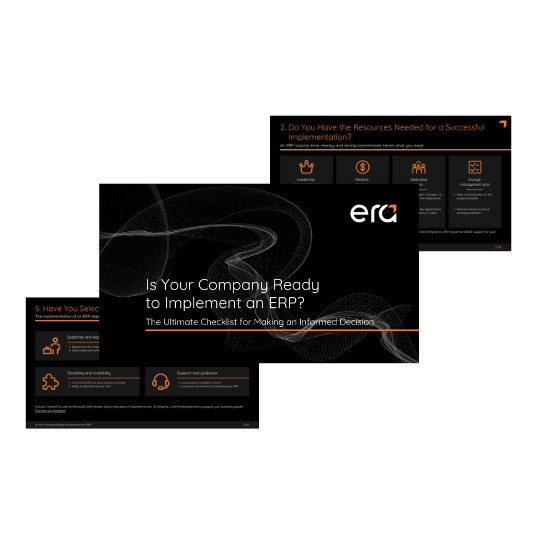
Are You Ready for an ERP Implementation?
Before choosing your next software, evaluate your company’s readiness for an integrated management system. Our ERP Implementation Readiness Checklist helps you identify your strengths, priorities, and areas to improve to ensure a successful project.
Download the free checklist| Software | Best for | Key Strengths |
|---|---|---|
| Dynamics 365 Business Central | Growing Canadian SMEs seeking an all-in-one ERP | Integrates accounting, operations, and compliance in a single platform |
| QuickBooks Online | Freelancers and small businesses | Simple, intuitive, and cloud-based for everyday accounting tasks |
| Sage 50cloud | SMEs transitioning from basic to advanced tools | Combines desktop reliability with cloud flexibility |
| Wave | Freelancers and microbusinesses | Free and easy-to-use for essential bookkeeping |
| Xero | Companies with international operations | Strong multi-currency and global integration features |
| FreshBooks | Service-based SMEs and consultants | Professional invoicing and client management made simple |
| Zoho Books | SMEs looking for an affordable integrated suite | Automates workflows and connects with Zoho ecosystem apps |
*Summary of leading accounting software for SMEs in Canada
What’s the difference between accounting software and an ERP?
Accounting software focuses primarily on financial tasks such as invoicing, expense tracking, and financial reporting. An ERP (Enterprise Resource Planning) system goes further by connecting accounting with inventory, purchasing, operations, and reporting in a single, integrated platform.
1. Microsoft Dynamics 365 Business Central
Best For: Canadian SMEs and SMBs needing advanced financial tools combined with operational management to scale efficiently.
Why Choose Business Central? Microsoft Dynamics 365 Business Central is an all-in-one ERP solution tailored to the unique needs of Canadian SMEs. It integrates accounting with other operational processes, enabling businesses to streamline workflows, improve financial accuracy, and support scalable growth.
Key Features:
- Comprehensive Financial Management: Offers general ledger management, automated invoicing, and real-time financial reporting with dashboards for informed decision-making.
- Tax Compliance: Fully compliant with Canadian tax laws, including automated GST/HST and PST/QST calculations, and provides detailed audit trails for CRA reporting.
- Integrated Operations: Combines accounting, inventory management, and project management into a unified platform for enhanced operational visibility.
- Scalability: Supports multi-currency handling, multi-entity management, and industry-specific features like production planning and job costing.
- Collaboration and Accessibility: Seamlessly integrates with Microsoft 365 tools like Outlook, Excel and Teams, and offers cloud-based accessibility for real-time collaboration.
- Bilingual Capabilities: Provides interfaces in both English and French to meet the needs of Canadian businesses operating Quebec.

2. QuickBooks Online
Best For: Freelancers and small businesses seeking an affordable, user-friendly platform.
Why Choose QuickBooks? QuickBooks Online offers simplicity and affordability, making it ideal for startups and freelancers. Its cloud-based features focus on essential accounting tasks without overwhelming users.
Key Features:
- Expense tracking with automated categorization.
- Professional invoicing templates.
- GST/HST filing tools.
- Mobile-friendly apps for on-the-go management.
3. Sage 50cloud (formerly Simply Accounting)
Best For: Small to mid-sized businesses transitioning from basic accounting tools.
Why Choose Sage 50cloud? Sage 50cloud combines desktop reliability with cloud flexibility, providing robust features for growing businesses.
Key Features:
- Outils de budgétisation avancés.Inventory management and forecasting.
- Payroll compliance with Canadian laws.
- Advanced budgeting tools.
4. Wave
Best For: Freelancers and micro-businesses needing free solutions.
Why Choose Wave? Wave is a free accounting software offering basic financial management tools, perfect for sole proprietors.
Key Features:
- Simple invoicing and receipt scanning.
- Basic GST/HST compliance.
- No subscription fees for core features.
5. Xero
Best For: Businesses with international operations.
Why Choose Xero? Xero is known for its global integration capabilities and multi-currency support, making it ideal for businesses with international transactions.
Key Features:
-
Automated bank reconciliation.
-
Inventory tracking.
-
Integration with over 800 apps.
6. FreshBooks
Best For: Freelancers and service-based businesses looking for simplified invoicing and client management.
Why Choose FreshBook? FreshBooks is ideal for businesses prioritizing ease of use and efficient client management. Its intuitive design makes it a go-to for service professionals.
Key Features:
-
Professional invoicing and payment tracking.
-
Time tracking linked directly to client invoices.
-
Expense management for tax preparation.
7. Zoho Books
Best For: SMBs seeking a cost-effective solution with extensive integration capabilities.
Why Choose Zoho Books? Zoho Books offers a powerful accounting platform with a user-friendly interface, perfect for businesses already using the Zoho ecosystem.
Key Features:
-
Automated workflows for recurring tasks.
-
Tax compliance with GST/HST support.
-
Seamless integration with Zoho apps.
How to Choose the Right Accounting Software in Canada?
Selecting the right accounting software is not just about balancing the books, it’s about laying a strong foundation for your business's future. With the wide variety of options available, making the right choice can feel overwhelming. The right software will not only address your immediate challenges but also grow with your business, ensuring you remain competitive and efficient. To help you navigate this decision, we’ve outlined the critical factors to consider when choosing the perfect solution for your unique needs:
1. Identify Your Needs
Summary: Focus on your biggest pain points such as tax compliance, payroll complexity, inventory management, and reporting requirements.
-
Evaluate your business’s pain points. Are you struggling with tax compliance, payroll, or inventory management?
-
Consider specific industry requirements. For example, manufacturing businesses may need tools for production planning, while retailers might prioritize POS integration.
-
Example: A wholesale business might look for inventory tracking and multi-currency support to handle cross-border sales efficiently.
2. Set a Budget
Summary: Consider the total cost of ownership, not just the monthly subscription price.
-
Assess the total cost of ownership, including subscription fees, upgrades, and potential training costs.
-
Explore tiered pricing or free trials to find software that meets your budget without compromising features.
-
Example: A startup might choose a basic plan initially, upgrading to more robust features as the business scales.
3. Evaluate Features
Summary: Prioritize automation, compliance tools, real-time reporting, and seamless integrations.
-
Look for essential features like automation, compliance tools, and real-time reporting.
-
Ensure the software integrates seamlessly with tools you already use, such as Microsoft 365 or e-commerce platforms.
-
Example: A business using Shopify for online sales should prioritize accounting software that automates sales and inventory tracking.
4. Test Usability
Summary: Choose software your team can adopt quickly without heavy training or technical barriers.
-
Choose user-friendly software that aligns with your team’s workflow and technical skills.
-
Take advantage of demos and free trials to assess functionality and ease of use.
-
Example: Non-technical teams benefit from intuitive dashboards and guided tutorials.
5. Plan for Growth
Summary: Select software that can scale with your business across entities, currencies, and regions.
-
Opt for software that scales with your business, supporting multi-entity operations, multi-currency transactions, and advanced analytics.
-
Ensure the software is flexible enough to accommodate new markets, regions, or industries as your business grows.
-
Example: A business expanding from Quebec to the U.S. will need bilingual support and cross-border compliance tools.
With these considerations in mind, selecting the right accounting software becomes a more manageable task that aligns with your business goals and operational needs.

Ready to Modernize Your Accounting and Operations?
Our Comprehensive ERP Implementation Guide walks you through the key steps, best practices, and common mistakes to avoid when deploying an ERP system, from solution selection to team training.
Download the full guideWhy Business Central is the Best Choice?
When it comes to accounting software tailored for Canadian businesses, Microsoft Dynamics 365 Business Central sets itself apart as a comprehensive, scalable, and feature-rich ERP solution. Here’s what makes Business Central truly stand out :
1. Advanced Accounting Features
Business Central simplifies complex financial management tasks, providing tools for :
-
General ledger management, automated invoicing, and bank reconciliations.
-
Real-time financial reporting through dynamic dashboards, enabling data-driven decisions.
-
Tax compliance with built-in support for GST/HST and PST/QST, ensuring CRA alignment and reducing the risk of penalties.
2. Scalability for Growing Businesses
Designed to grow with your business, Business Central offers :
-
Multi-entity management for businesses operating across multiple locations.
-
Multi-currency handling for seamless international transactions.
-
Industry-specific capabilities like job costing, production planning, and inventory optimization.
3. Seamless ERP Capabilities
As a complete ERP solution, Business Central integrates accounting with :
-
Inventory management to track stock levels, streamline procurement, and manage warehouse operations.
-
Supply chain management to optimize vendor relationships and reduce costs.
-
Project management tools for tracking budgets, timelines, and profitability in real time.
4. Integration Microsoft Ecosytem
Business Central seamlessly connects with other Microsoft tools such as :
-
Microsoft 365: Boost productivity with integrations into Excel, Word, and Outlook.
-
Microsoft Teams: Enhance collaboration through real-time data sharing and communication.
-
Power BI: Generate actionable insights with advanced analytics and visualizations.

5. Localized for Canadian Enterprise
Canadian SMBs benefit from Business Central’s:
-
Built-in tax calculation for provincial and federal regulations, including GST/HST and payroll deductions like CPP and EI.
-
Bilingual interface options in English and French, catering to businesses operating in Quebec and beyond.
-
Compliance with Canadian privacy laws like PIPEDA (Personal Information Protection and Electronic Documents Act).
6. Enhanced Financial Insights
With real-time access to financial data, Business Central empowers businesses to:
-
Monitor cash flow and profitability.
-
Forecast future performance with predictive analytics.
-
Make informed decisions with up-to-date, customizable reports.
7. Industry-Specific Solutions
Business Central is tailored for various industries such as:
-
Manufacturing: Offers production scheduling, resource management, and cost tracking.
-
Wholesale and Distribution: Provides tools for inventory optimization, order tracking, and logistics management.
-
Professional Services: Includes project billing, expense tracking, and client management.
8. Accessibility and Collaboration
As a cloud-based solution, Business Central provides:
-
Anywhere, anytime access to financial data.
-
Real-time collaboration across teams, improving efficiency and reducing delays.
-
Scalable cloud storage that grows with your business.
9.Security and Reliability
Microsoft Dynamics 365 Business Central prioritizes security by:
-
Utilizing robust encryption to protect sensitive financial data.
-
Offering advanced features like two-factor authentication and secure cloud storage.
-
Ensuring consistent updates to stay ahead of potential vulnerabilities.
10. Advanced Capabilities
Business Central, combined with Era’s NextGen solutions, empowers SMBs to achieve unprecedented efficiency and innovation by:
-
Seamlessly integrating with NextGen tools such as AI-driven decision-making and unified eCommerce solutions for both B2B and B2C models.
-
Leveraging predictive analytics to uncover growth opportunities and automate repetitive tasks, saving time and resources.
-
Personalizing customer experiences through advanced technology designed to drive engagement and operational excellence.
Discover the Power of Business Central
For Canadian SMBs looking for a transformative solution to their accounting and operational challenges, Microsoft Dynamics 365 Business Central is the clear choice. It combines powerful features with scalability, integration, and local compliance, making it the ultimate tool for businesses ready to streamline their processes and scale effectively.
FAQ
What is the best accounting software in Canada for SMEs?
In 2026, several solutions stand out for Canadian SMEs, including QuickBooks, Sage 50cloud, Zoho Books, and Microsoft Dynamics 365 Business Central. Each offers features tailored to different business sizes and industries, with Business Central being the most complete ERP-level option for growing companies.
Is QuickBooks the best software for small businesses in Canada?
QuickBooks Online is one of the most popular accounting tools for small businesses thanks to its ease of use and cloud-based flexibility. However, businesses with more complex needs—such as inventory management or project tracking—may benefit from more scalable solutions like Business Central or Zoho Books.
What features should I look for in accounting software?
Look for automation tools, real-time dashboards, bilingual support, and compliance with Canadian tax laws such as GST/HST and QST. Integration with other business applications like CRM or inventory systems is also essential for efficient workflows.
Why choose Microsoft Dynamics 365 Business Central over other tools?
Unlike traditional accounting software, Business Central combines financial management with operations, inventory, and project tracking. It’s ideal for SMEs planning to scale or unify their processes under one platform while staying compliant with Canadian regulations.
What accounting software is most commonly used in Canada?
Many Canadian SMEs commonly use cloud-based tools such as QuickBooks Online, Sage solutions, and Zoho Books. The most commonly used software depends on company size, industry, and the level of financial and operational complexity.
What’s the difference between bookkeeping software and accounting software?
Bookkeeping software focuses on recording transactions and basic invoicing. Accounting software goes further by offering automation, financial reporting, tax management, and deeper insights, while ERP systems also integrate operations like inventory and purchasing.
Do Canadian businesses need accounting software that supports GST/HST and QST?
Yes. Canadian businesses should use accounting software that supports GST/HST and, if applicable, QST. This ensures accurate tax calculations, simplifies compliance, and reduces the risk of reporting errors.
When should a business switch from QuickBooks to an ERP like Business Central?
A business should consider switching when it outgrows basic accounting needs—such as requiring multi-entity reporting, tighter inventory control, stronger approvals, or integrated operations across departments.
Oussama Nait-Zlay
Content Marketing Manager
Oussama is a technology content expert at Era Consulting Group. He focuses on making complex topics related to ERP and enterprise technologies accessible, helping organizations fully leverage digital innovations. He brings several years of experience in the SaaS and technology industries, notably with companies such as Zoho and ManageEngine.
Follow Oussama Nait-Zlay
Featured