
Best ERP Software in Canada for SMBs: 8 ERP Systems Compared for 2026

Oussama Nait-Zlay
Content Marketing Manager
March 02, 2026
Choosing an ERP system for an SMB in Canada is no longer just an IT project. It’s a strategic decision. And sometimes… a real headache.
Between vendor promises, partner recommendations, potential government grants, internal budget discussions, and resistance to change, it can quickly feel like shopping for a house without an architect’s blueprint.
And yet, the pressure is very real.
Manufacturing SMBs are dealing with tight lead times, labor shortages, and rising costs. Distributors are managing increasingly unpredictable inventory. Even service firms are looking for better structure to support growth.
An ERP system can change the game.
But not just any ERP.
The truth is, there is no universally “best” ERP. There is only the right ERP for your reality. Your industry. Your level of operational complexity. Your budget. Your organizational maturity.
That’s exactly what we’ll clarify here.
In this 2026 comparison guide, you’ll find:
- The 8 most relevant ERP systems for SMBs in Canada
- A clear and structured comparison table
- Industry-based recommendations
- A realistic overview of costs
- And most importantly, practical criteria to help you make an informed decision
This is not a generic copy-paste list. It’s a structured framework tailored to the Canadian market.
So where should you begin?
Before even looking at vendor names, you need to understand what makes an ERP system the right fit for your business.
How to choose an ERP for your SMB in Canada
Before comparing vendors.
Before scheduling demos.
Before requesting proposals.
Pause.
Choosing an ERP is not just selecting software. It’s choosing the operational backbone of your company. And if that backbone doesn’t match your reality, friction follows.
Here are the criteria that matter most.
1. Your industry changes everything
An ERP for a manufacturer does not prioritize the same capabilities as one designed for a professional services firm.
A Canadian manufacturer must manage:
- Bills of materials
- Production scheduling
- Capacity constraints
- Real-time inventory visibility
A distributor focuses on:
- Stock turnover
- Multi-warehouse management
- Supply chain traceability
A service-based company prioritizes:
- Project tracking
- Time billing
- Resource allocation
- Profitability by client
That’s why a “Top 8” list without segmentation can be misleading.
A solution may be excellent… just not for your business model.
2. The size and complexity of your SMB
Not all SMBs operate at the same level of complexity.
A 20-employee company with largely manual processes has very different needs than a 200-employee organization operating across provinces with structured workflows.
Many businesses aim for the most advanced system available. That’s understandable. You want to future-proof your operations.
But here’s the nuance.
An ERP that is too complex can slow adoption.
An ERP that is too limited can restrict growth.
You need balance.
Evaluate:
- Number of users
- Organizational structure
- Process stability
- Data quality
Because an ERP does not fix weak data. It amplifies it.
3. Budget… beyond the license fee
When discussing ERP costs in Canada, the question always comes up: how much does it cost?
Fair question. But incomplete.
An ERP project includes:
- Software licensing
- Implementation services
- Configuration
- Training
- Change management
- Potential integrations
Costs vary based on complexity and scope.
A cloud ERP like Microsoft Dynamics 365 Business Central offers modular flexibility. Other systems may require larger upfront investments.
The real question isn’t cheap versus expensive.
It’s alignment between your ambition and your capacity to execute.
4. Local support across Canada
Canada’s regulatory landscape is diverse. Taxation rules, provincial compliance, bilingual environments, and industry-specific regulations all matter.
Working with an implementation partner that understands the Canadian context can significantly reduce friction.
When issues arise, proximity and familiarity with local regulations matter more than most organizations expect.
5. Organizational readiness
This is often the overlooked factor.
Are your processes documented?
Is your data reliable?
Is your leadership aligned?
An ERP system rests on operational discipline.
If your organization is still heavily manual, a phased approach may be more strategic than deploying the most sophisticated platform available.
Growth is not only about software capability.
It’s about organizational maturity.
How we evaluated these ERP systems
To compare ERP software for Canadian SMBs, we focused on the factors that have the biggest impact on long-term fit and implementation success:
- Suitability for Canadian SMBs
- Manufacturing, distribution, and service capabilities
- Scalability as the business grows
- Implementation complexity
- Overall investment level
- Integration and ecosystem capabilities
- Availability of experienced implementation partners in Canada
The goal is not to rank one ERP as universally better than another, but to identify which type of organization each system is best suited for.
Comparison table of leading ERP solutions for SMBs in Canada
Before diving into each platform in detail, here’s a high-level view of the ERP solutions most relevant to Canadian SMBs in 2026.
This is not a ranking from “best” to “worst.” It’s a positioning tool.
An ERP that fits a 40-employee distributor in Ontario may not suit a multi-plant manufacturer in Alberta. Context matters.
At a glance: Business Central is a strong all-around choice for growing SMBs, NetSuite stands out for multi-entity organizations, JD Edwards and Epicor are better suited to complex manufacturing environments, while Odoo is more accessible for smaller or budget-conscious businesses.
Here’s a structured overview.
How to interpret this table
A few clarifications.
The “budget range” reflects relative positioning within the Canadian SMB ERP market. Actual costs depend on:
- Number of users
- Scope of implementation
- Customization needs
- Integration requirements
- Internal readiness
Complexity level reflects both functional depth and implementation effort. A higher-complexity ERP offers broader capabilities, but also requires stronger internal discipline and governance.
In other words, more power means more responsibility.
An important observation
You’ll notice that several ERP solutions overlap across industries.
So how do you differentiate them?
Often, the difference comes down to:
- Ecosystem compatibility
- Industry-specific functionality
- Scalability
- Implementation partner expertise
- Long-term growth plans
For example, an SMB already operating within Microsoft 365 may find natural continuity with Microsoft Dynamics 365 Business Central. A multi-entity organization with international ambitions may lean toward NetSuite.
It’s not about superiority. It’s about fit.
Next, we’ll break down each ERP solution individually, starting with one of the most widely adopted platforms among Canadian SMBs.
Let’s begin with Microsoft Dynamics 365 Business Central.
1. Microsoft Dynamics 365 Business Central
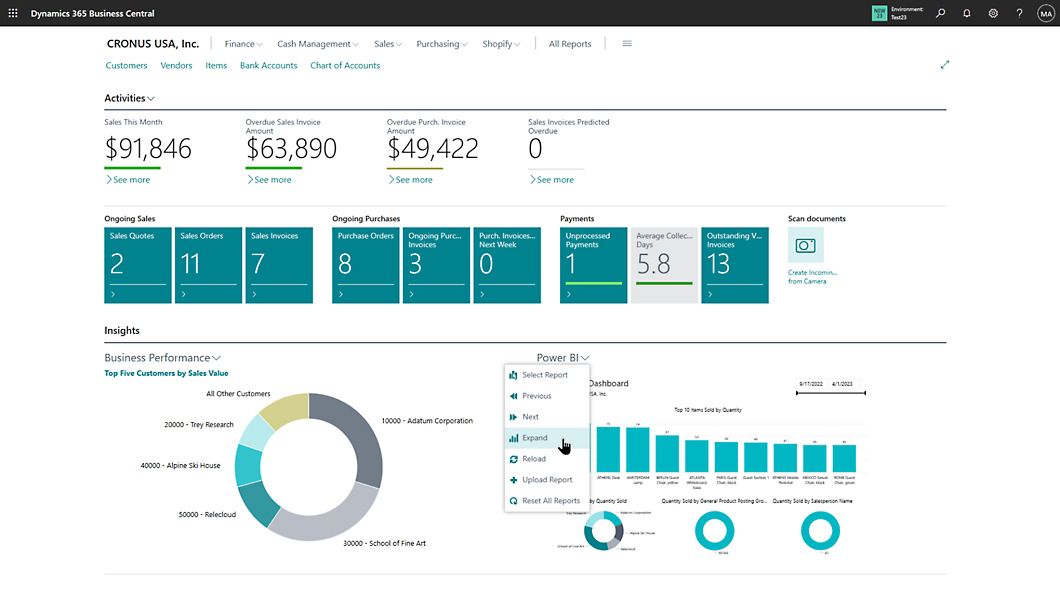
Microsoft Dynamics 365 Business Central is one of the strongest all-around ERP options for growing Canadian SMBs, particularly organizations that want a modern cloud platform with strong Microsoft integration.
It has become one of the most widely adopted platforms in the Canadian SMB market, particularly among organizations already using Microsoft 365.
Who it is best suited for
Dynamics 365 Business Central typically serves:
- Growing Canadian SMBs with roughly 20 to 250 employees
- Light to mid-level manufacturers
- Distributors
- Service-based businesses
- Organizations already embedded in the Microsoft ecosystem
If your teams already rely on Outlook, Excel, Teams, and Power BI, integration becomes seamless. That continuity often reduces resistance and improves user adoption.
And adoption is where many ERP projects succeed or fail.
Core strengths
Business Central is often described as balanced.
Not overly complex.
Not overly simplistic.
Its strengths include:
- Native integration with Microsoft tools
- Cloud-first architecture
- Modular expansion capabilities
- Strong Canadian partner ecosystem
- Broad financial and operational coverage
It supports finance, purchasing, sales, inventory, light manufacturing, and project management in a unified platform.
For many Canadian SMBs, it offers the right mix of structure and flexibility.
Where to be realistic
Business Central is not a heavy industrial ERP out of the box.
Highly complex manufacturing environments with advanced capacity planning, multi-plant optimization, or deep shop floor control may require additional modules or specialized systems such as Epicor or Oracle JD Edwards.
That said, Business Central benefits from a large ecosystem of extensions that can expand functionality significantly.
It can grow with the organization.
But it is not designed to be a niche industrial platform by default.
Budget considerations in Canada
For Canadian SMBs, Business Central typically falls within the mid-range of the ERP market.
Costs depend on:
- Number of users
- Implementation scope
- Customization level
- Industry requirements
Licensing is subscription-based, which allows for predictable operating costs. Implementation remains the largest variable.
A well-scoped project stays controlled. A poorly defined one expands quickly.
When it becomes a strategic choice
Business Central is particularly well suited if:
- You want a modern cloud ERP
- You value integration with Microsoft tools
- You need scalable functionality
- You prefer working with a strong Canadian partner network
It may not be the most specialized ERP in the market, but for many SMBs, it delivers consistency and long-term adaptability.
And often, consistency matters more than complexity.
2. SAP Business One
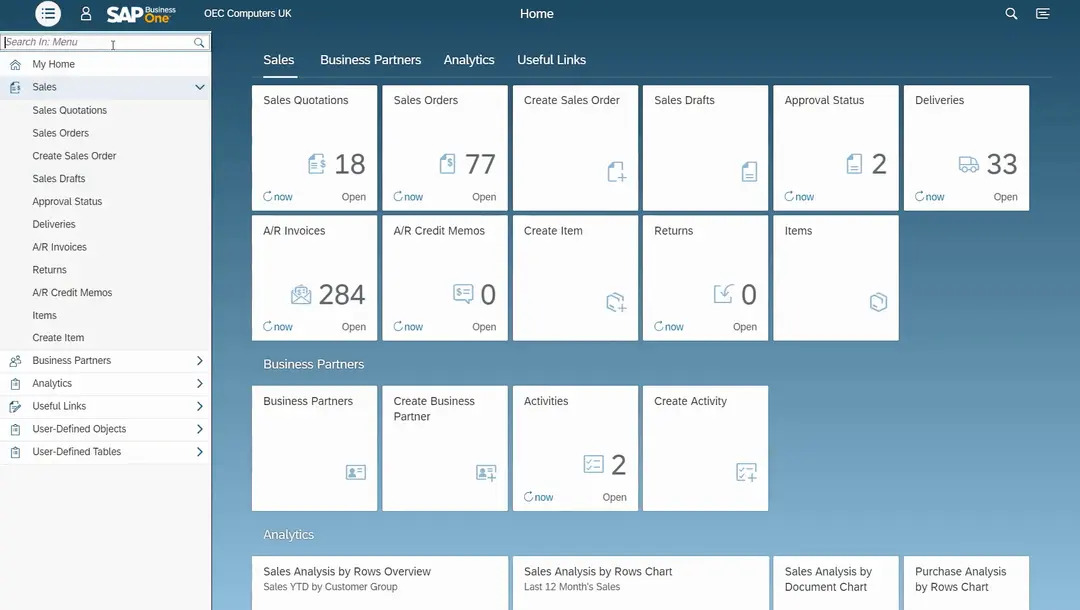
SAP Business One is a strong fit for structured Canadian SMBs that prioritize financial control, process discipline, and the stability of a globally established ERP platform.
When people hear the name SAP, they often associate it with large enterprises. But SAP Business One was specifically designed for small and mid-sized businesses. It brings the structure and discipline of the SAP ecosystem into a format more suitable for SMBs.
Who it is best suited for
SAP Business One typically appeals to:
- Structured Canadian SMBs with strong financial oversight
- Distribution companies
- Manufacturing businesses with defined processes
- Organizations seeking a well-established global brand
It is often selected by leadership teams that prioritize financial control and system stability.
Brand recognition can also play a role in the decision process, particularly for organizations that value long-term vendor credibility.
Core strengths
SAP Business One is known for:
- Strong financial management capabilities
- Structured reporting
- Mature functionality
- Established global footprint
It provides comprehensive coverage across accounting, inventory management, purchasing, and sales.
For businesses that value process discipline and formal controls, this structure can be reassuring.
Where to be realistic
SAP Business One can feel more rigid compared to some newer cloud-native ERP platforms.
Customization is possible, but the system is generally more structured in its design. That structure is a strength for some organizations and a limitation for others.
Compared to Microsoft Dynamics 365 Business Central, for example, it may offer less natural integration with Microsoft collaboration tools.
Cost can also trend toward the mid-to-upper range of the SMB ERP market, depending on deployment and customization requirements.
Budget considerations in Canada
In the Canadian market, SAP Business One typically falls within the mid-range ERP category.
Total project cost depends on:
- Number of users
- Deployment model (cloud or hybrid)
- Implementation partner
- Scope of configuration
As with any ERP, implementation complexity drives the overall investment.
When it becomes a strategic choice
SAP Business One may be a strong fit if:
- Financial controls are a top priority
- Your processes are already well defined
- You prefer a globally recognized ERP brand
- You want structured governance across departments
It may be less ideal for very small organizations seeking a lightweight deployment or for businesses prioritizing deep Microsoft ecosystem integration.
Ultimately, SAP Business One offers stability and discipline. For the right SMB, that can be exactly what is needed.
3. Oracle NetSuite
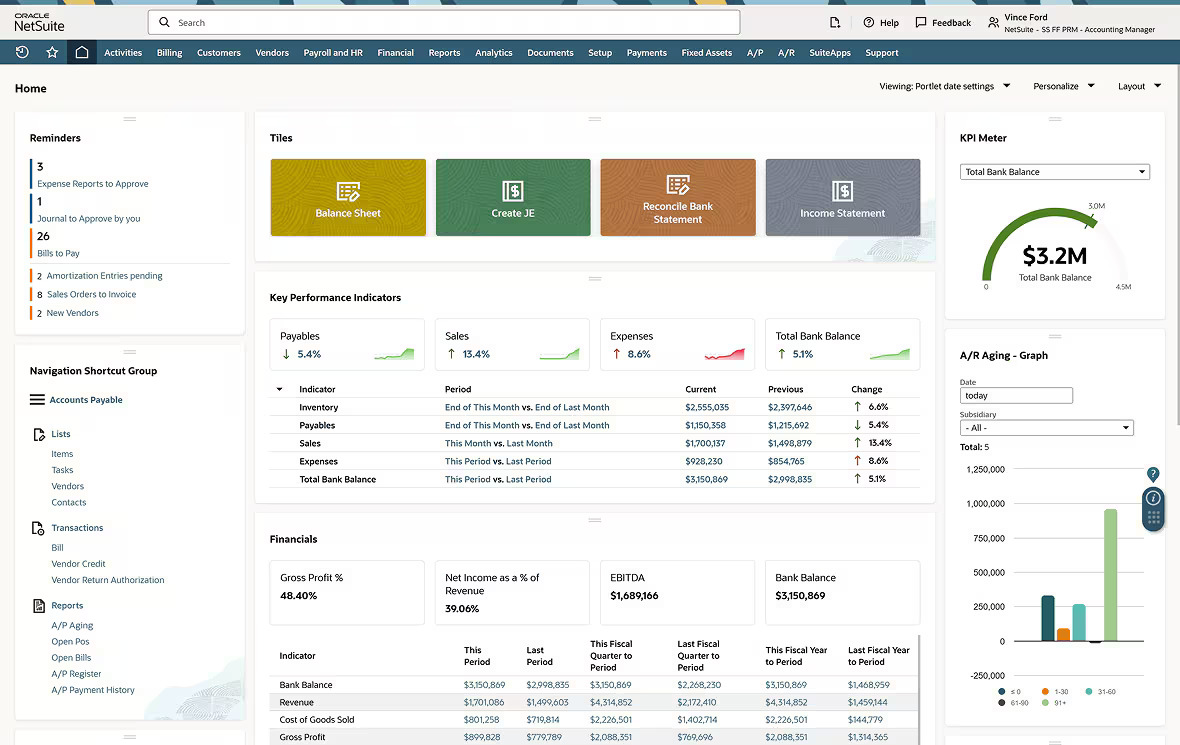
Oracle NetSuite is a strong fit for Canadian SMBs that need cloud-based ERP capabilities across multiple entities, locations, or subsidiaries.
Oracle NetSuite is often described as one of the pioneers of cloud ERP. Long before cloud deployment became standard, NetSuite was built around that model. Today, as part of Oracle, it carries the backing of a global technology leader while maintaining a strong focus on mid-sized and growing businesses.
Who it is best suited for
NetSuite is typically selected by:
- Growing Canadian SMBs with multiple entities, locations, or subsidiaries
- Multi-entity or multi-subsidiary organizations
- Companies operating across provinces or internationally
- Service-based and e-commerce businesses
It is particularly attractive for organizations that require consolidated financial reporting across multiple legal entities.
For Canadian SMBs expanding into the U.S. or overseas markets, this capability can become essential.
Core strengths
NetSuite’s main advantages include:
- Fully cloud-native architecture
- Multi-entity and multi-currency management
- Strong financial consolidation tools
- Real-time dashboards and reporting
Because it was designed as a cloud platform from the start, it avoids some of the legacy limitations seen in older systems adapted to cloud environments later.
For organizations prioritizing centralized control and visibility, this architecture can be compelling.
Where to be realistic
NetSuite generally sits in the upper tier of the SMB ERP market.
Implementation can be more structured and demanding, particularly for organizations with complex requirements. Partner selection is critical, as the Canadian ecosystem is more partner-driven than locally dense.
For smaller or purely domestic businesses with simpler needs, the system may feel more extensive than necessary.
Budget considerations in Canada
In Canada, NetSuite typically falls into the higher investment range for SMB ERP solutions.
Cost drivers include:
- Number of users
- Modules selected
- Complexity of multi-entity structures
- Integration requirements
It is rarely chosen for minimal-scope deployments.
Organizations that select NetSuite usually do so with long-term scalability in mind.
When it becomes a strategic choice
NetSuite may be the right fit if:
- You operate across multiple entities or jurisdictions
- You need consolidated reporting
- You anticipate international growth
- You prefer a unified cloud-native architecture
It may be less appropriate for very small organizations or businesses seeking a lighter deployment model.
For ambitious SMBs planning structured growth, NetSuite can provide a strong foundation.
4. Acumatica
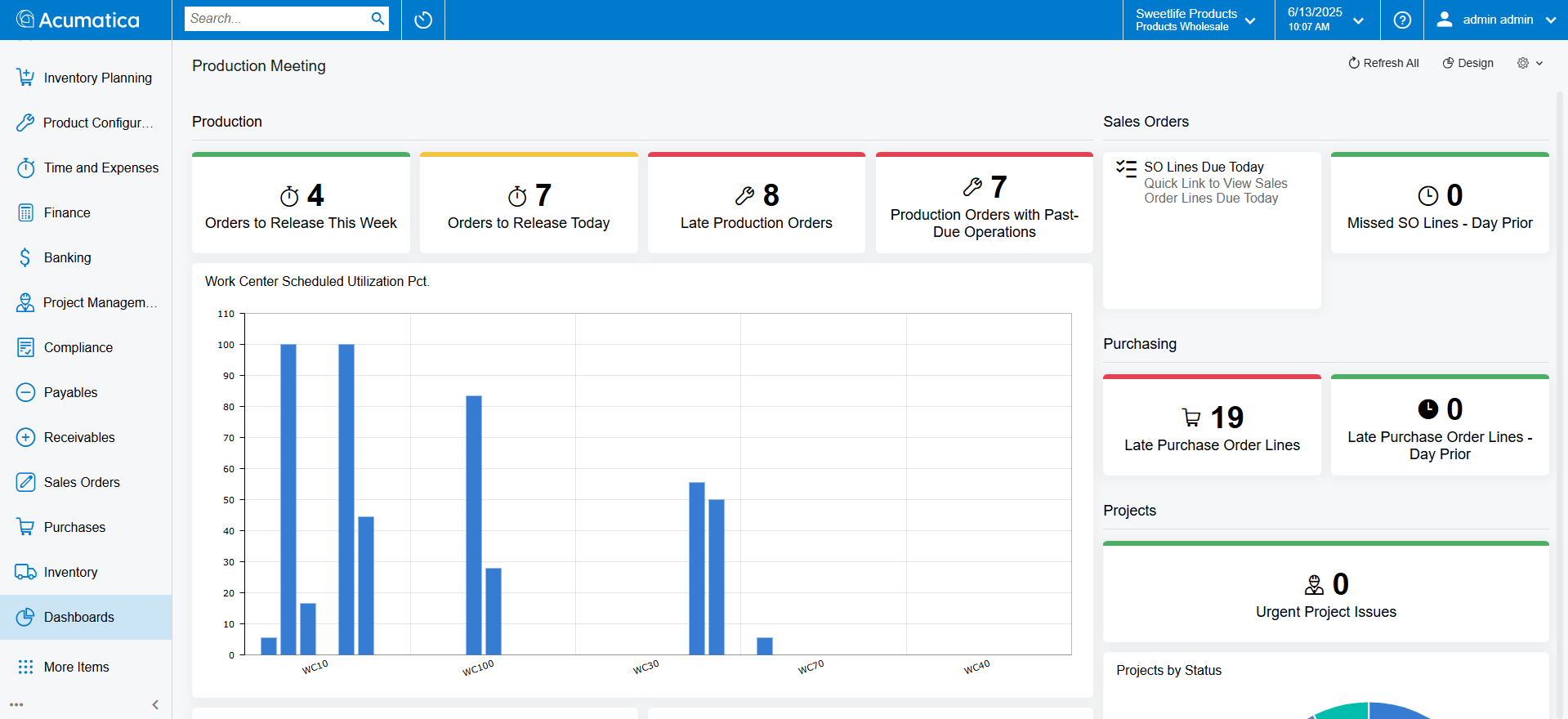
Acumatica is a strong fit for growing Canadian SMBs that want a modern cloud ERP with flexible licensing, strong usability, and room to scale.
Acumatica has positioned itself as a flexible alternative in the SMB ERP space. It may not carry the same brand recognition as SAP or Oracle, but it has steadily gained traction among growing businesses in Canada. Its appeal often lies in its adaptability.
Who it is best suited for
Acumatica typically attracts:
- Growing Canadian SMBs looking for a flexible cloud ERP platform
- Organizations needing customization flexibility
- Distribution and construction companies
- Light to mid-level manufacturers
It is often considered by companies that want modern cloud functionality without being locked into a rigid licensing structure.
Core strengths
Acumatica stands out for:
- Cloud-native architecture
- Flexible licensing model
- Strong customization capabilities
- Industry-focused editions
Unlike many ERP systems that price strictly per user, Acumatica’s model is based more on resource consumption. For certain organizations, this can create cost predictability as user counts grow.
Its modular approach allows businesses to scale functionality over time.
Where to be realistic
Acumatica’s Canadian partner network is still developing compared to more established ERP ecosystems.
Implementation quality depends heavily on the partner’s industry expertise.
Additionally, while flexible, it still requires structured processes. It is not a lightweight plug-and-play tool.
Organizations must be prepared for disciplined implementation.
Budget considerations in Canada
Acumatica generally falls within the mid-range of the SMB ERP market.
Investment levels vary based on:
- Transaction volume
- Industry modules required
- Customizations
- Implementation scope
It is rarely the lowest-cost option, but it can be competitive depending on growth projections and usage patterns.
When it becomes a strategic choice
Acumatica may be a strong fit if:
- You want flexibility in licensing
- You expect user growth over time
- You require customization without heavy development
- You operate in distribution, construction, or light manufacturing
It may be less suitable for very small organizations seeking minimal functionality or for highly specialized industrial environments requiring deep manufacturing control.
For SMBs seeking a modern, adaptable ERP with room to grow, Acumatica is worth considering.
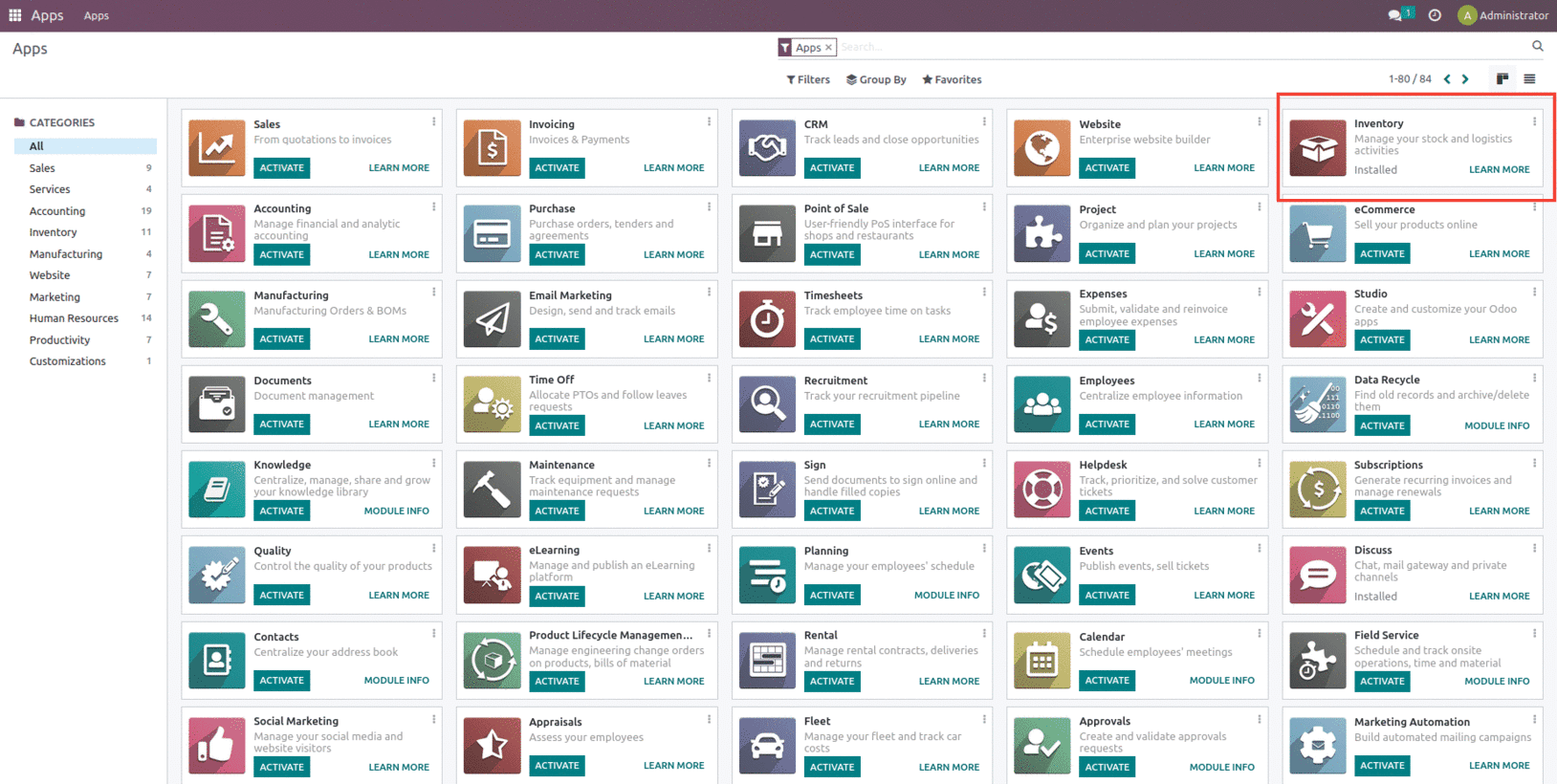
5. Odoo
Odoo is a flexible and accessible ERP option for smaller Canadian businesses that want an all-in-one platform with lower entry costs and a modular approach.
Odoo occupies a different space in the ERP landscape. It is modular, adaptable, and often perceived as more accessible, particularly for smaller organizations or businesses beginning their digital transformation journey. For some Canadian SMBs, that accessibility is precisely the appeal.
Who it is best suited for
Odoo is typically considered by:
- Smaller Canadian businesses looking for a flexible, modular ERP with a lower entry cost
- Budget-conscious organizations
- Service-based companies
- Retail and light operational businesses
It is less common in highly complex manufacturing environments but frequently adopted in organizations that want integrated functionality without a heavy initial investment.
Core strengths
Odoo’s primary strength lies in its modular structure.
Companies can start with core modules such as accounting, CRM, or inventory management and expand gradually.
Its advantages include:
- Broad module selection
- Lower entry cost
- Flexible deployment options (cloud or on-premise)
- Open architecture
For organizations seeking step-by-step system evolution, this flexibility can be attractive.
Where to be realistic
The flexibility of Odoo can also create variability.
Implementation quality depends significantly on the selected partner. Not all Odoo deployments are equal.
For businesses with advanced industrial requirements, deep capacity planning needs, or multi-entity complexity, Odoo may require additional configuration or third-party extensions.
It is important to evaluate whether the functional depth aligns with long-term operational goals.
Budget considerations in Canada
Odoo generally sits in the lower to mid-range of the Canadian SMB ERP market.
Total investment depends on:
- Number of modules
- Custom development
- Hosting choice
- Implementation services
It can be cost-effective at entry level, but scope expansion increases project complexity and cost.
When it becomes a strategic choice
Odoo may be appropriate if:
- Your organization is still formalizing processes
- You need modular flexibility
- Budget constraints are a major factor
- You prefer gradual system expansion
It may be less appropriate for industrial manufacturing environments requiring advanced operational control.
For the right SMB, Odoo can provide an accessible entry point into ERP structure.
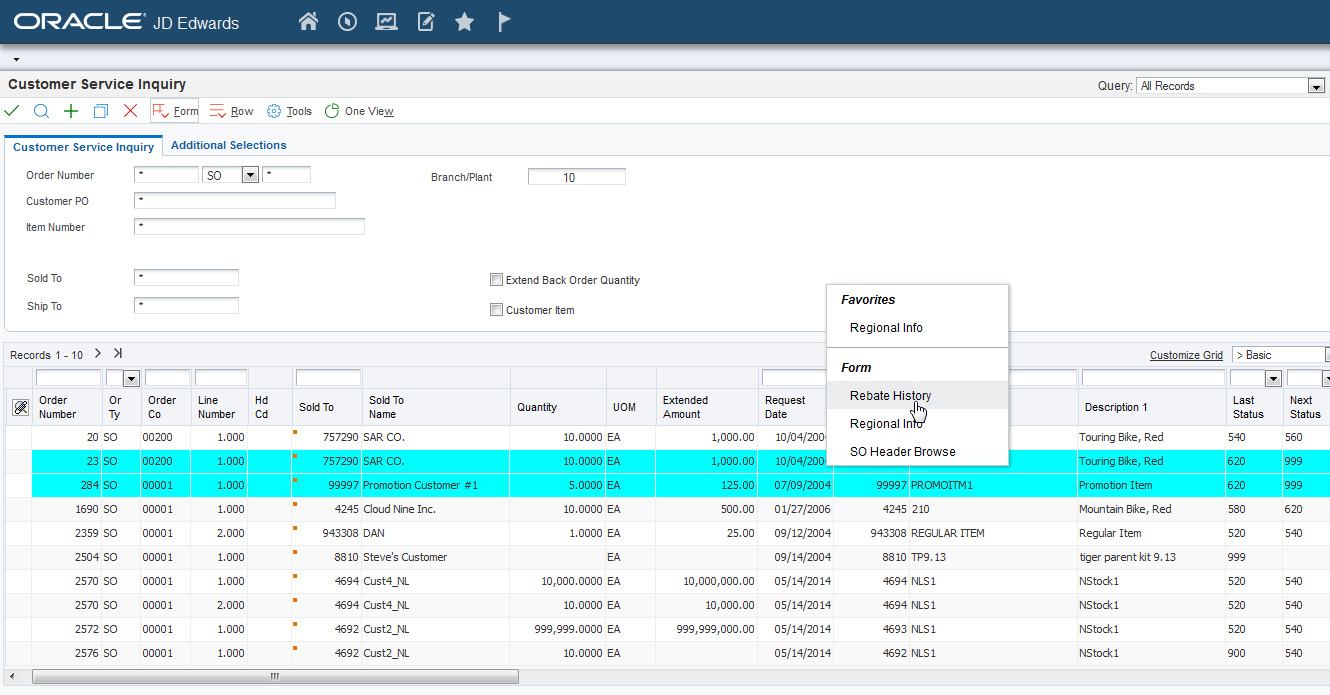
6. Oracle JD Edwards
JD Edwards EnterpriseOne is best suited to larger or more complex Canadian SMBs, especially manufacturers and distributors with demanding operational requirements.
Oracle JD Edwards serves a different category of organization compared to the ERP systems we’ve discussed so far. While often associated with larger enterprises, it is also deployed by upper mid-market companies and more complex manufacturing environments across Canada. This is not a lightweight SMB platform. It is a structured, industrial-grade ERP.
Who it is best suited for
JD Edwards is typically selected by:
- Larger Canadian SMBs and mid-market organizations with complex manufacturing or distribution operations
- Multi-site manufacturers
- Industrial businesses with complex supply chains
- Companies requiring advanced production control
It is most common in manufacturing-heavy industries where operational precision and system depth are critical.
Core strengths
JD Edwards is recognized for:
- Advanced manufacturing capabilities
- Multi-site and multi-entity management
- Strong financial and operational integration
- Long-term platform stability
Its functionality supports detailed production planning, procurement control, and supply chain visibility at scale.
For organizations managing multiple plants or large operational footprints, this level of control can be essential.
Where to be realistic
JD Edwards requires significant organizational maturity.
Implementation projects are typically more complex and resource-intensive than standard SMB ERP deployments.
It demands:
- Clear governance
- Structured processes
- Strong executive sponsorship
- Internal project commitment
For smaller or less structured SMBs, it may be disproportionate.
It is designed for operational environments that are already disciplined and complex.
Budget considerations in Canada
JD Edwards sits in the higher tier of ERP investment within the Canadian market.
Cost is influenced by:
- Number of sites
- Industry complexity
- Integration requirements
- Scope of deployment
It is rarely implemented as a minimal-scope project.
Organizations selecting JD Edwards generally do so with long-term operational scale in mind.
When it becomes a strategic choice
JD Edwards may be appropriate if:
- You operate multiple facilities
- Your manufacturing processes are complex
- You require advanced production and supply chain control
- Your organization has the internal maturity to manage a structured ERP project
It may not be the right fit for early-stage SMBs or companies seeking rapid, lightweight deployment.
For complex industrial environments, however, it can provide depth and durability.
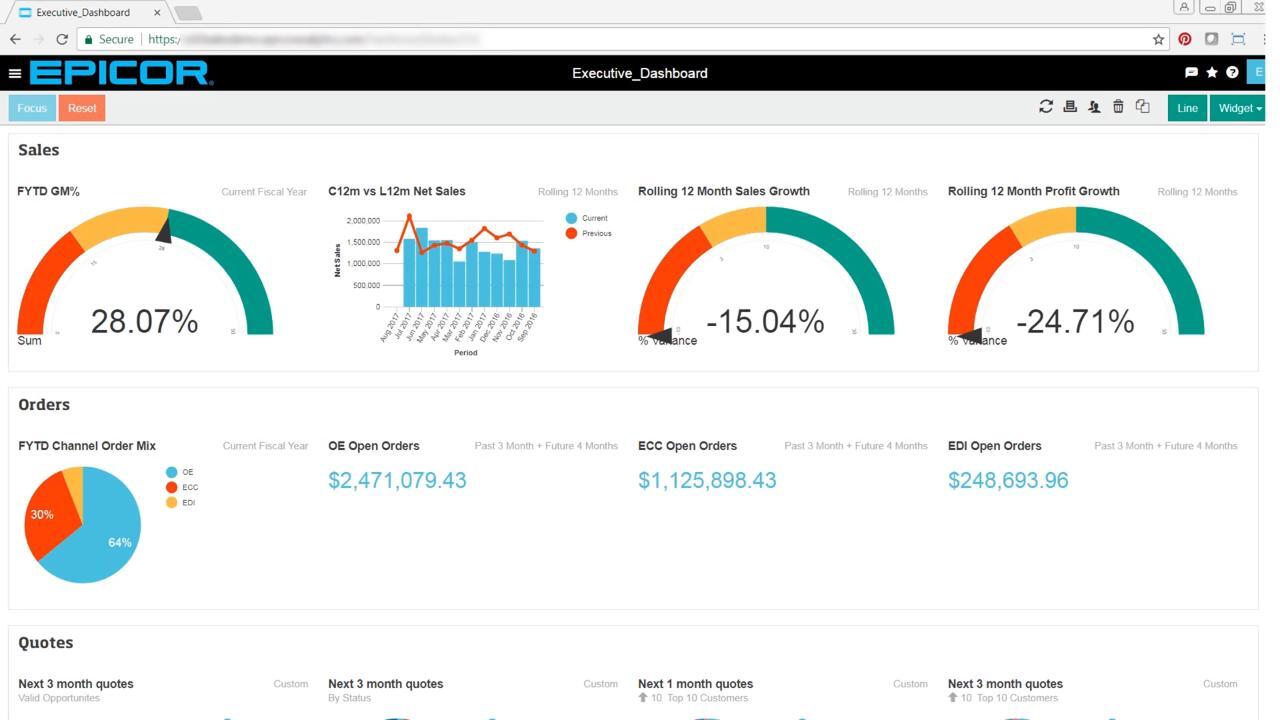
7. Epicor
Epicor is a strong fit for Canadian manufacturers and distributors that need deep industry-specific functionality without moving to a larger enterprise ERP platform.
Epicor is often associated with manufacturing-first ERP design. Unlike generalist platforms that include manufacturing as one module among many, Epicor has historically focused on industrial production environments. For certain Canadian manufacturers, that specialization is its strongest advantage.
Who it is best suited for
Epicor typically serves:
- Canadian manufacturers and distributors with specialized operational requirements
- Industrial production companies
- Make-to-order or engineer-to-order businesses
- Organizations requiring shop floor control
It is most relevant where production operations sit at the core of the business model.
Core strengths
Epicor is recognized for:
- Deep manufacturing functionality
- Advanced production planning
- Shop floor visibility
- Industry-specific manufacturing workflows
Its tools are designed to manage capacity, materials, and production sequences with precision.
For businesses where operational efficiency directly impacts margins, this level of control can be significant.
Where to be realistic
Epicor’s specialization means it may feel excessive for organizations that are primarily service-based or distribution-focused.
Implementation projects require:
- Structured operational processes
- Clear production workflows
- Strong internal project leadership
Like other industrial-focused ERP platforms, it is not designed for minimal-scope deployment.
Organizations must be prepared for a disciplined implementation process.
Budget considerations in Canada
Epicor typically falls into the upper mid to high range of the Canadian SMB ERP market.
Investment depends on:
- Manufacturing complexity
- Number of users
- Required modules
- Integration scope
It is not usually chosen for basic financial or inventory needs alone.
When it becomes a strategic choice
Epicor may be appropriate if:
- Manufacturing is your core operation
- You require advanced production control
- Shop floor management is a priority
- You operate in a highly technical industrial environment
It may not be ideal for organizations seeking a broad general-purpose ERP without deep manufacturing requirements.
For the right production-focused SMB, however, Epicor can provide operational depth that generalist platforms may not match.
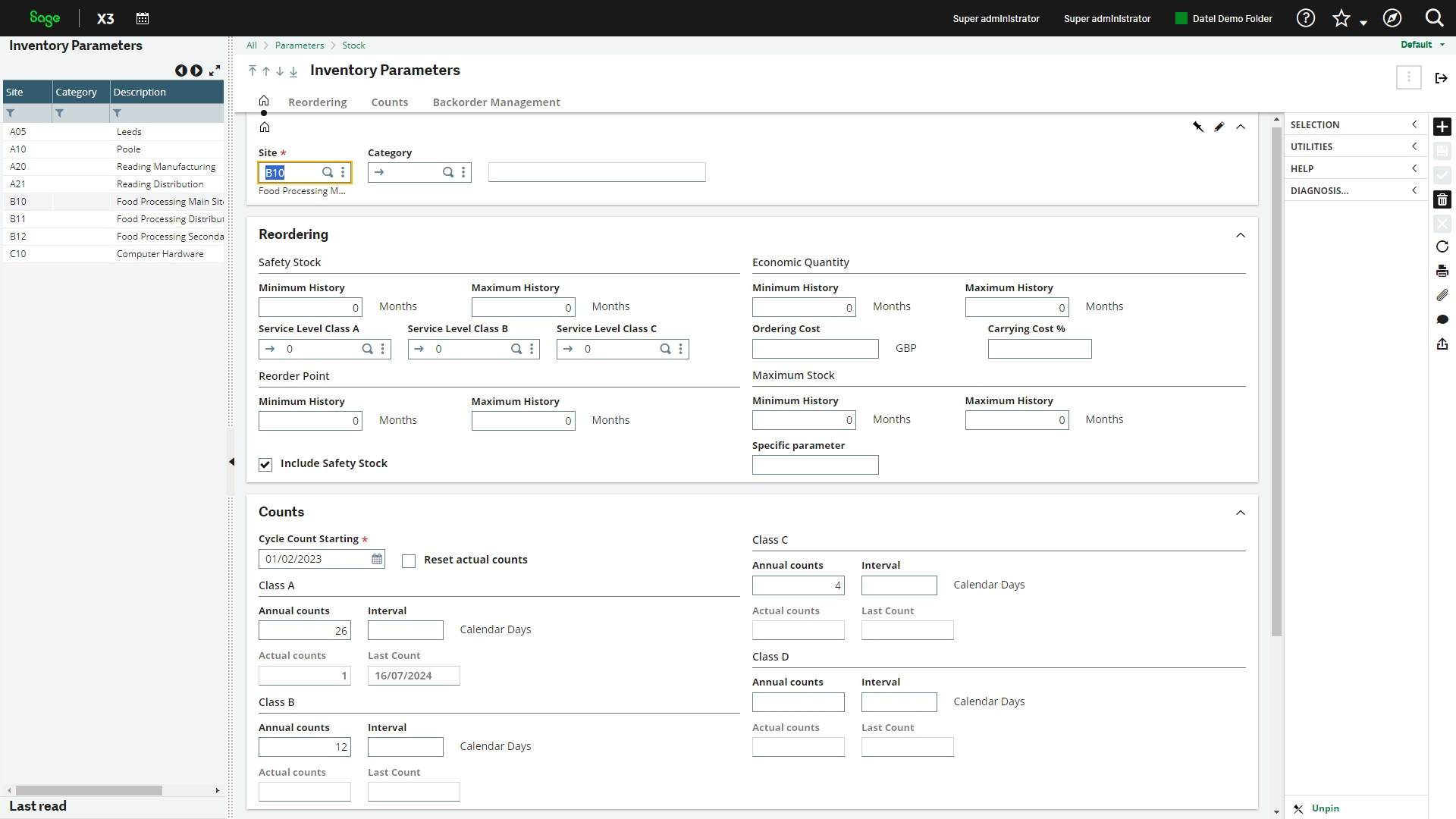
8. Sage X3
Sage X3 is best suited to Canadian mid-sized businesses that have outgrown simpler ERP systems and need stronger control across finance, manufacturing, inventory, and multiple sites.
Sage X3 sits between generalist SMB ERP systems and highly specialized industrial platforms. It is often selected by manufacturing and distribution companies that need structured functionality without moving into enterprise-scale complexity. It has an established presence in the Canadian market, particularly among mid-sized organizations.
Who it is best suited for
Sage X3 typically serves:
- Canadian mid-sized businesses with complex operations across multiple sites or business units
- Distribution companies
- Organizations with integrated finance and operations needs
- Businesses with moderate to high operational complexity
It is frequently adopted in sectors such as food processing, industrial manufacturing, and specialized distribution.
Core strengths
Sage X3 is known for:
- Integrated financial and operational management
- Manufacturing and distribution functionality
- Multi-entity support
- Structured reporting capabilities
It provides a comprehensive environment that connects finance, supply chain, and production within a single system.
For organizations that require stronger operational structure than entry-level ERP systems offer, Sage X3 can represent a balanced step up.
Where to be realistic
Sage X3 requires organizational readiness.
Implementation projects demand:
- Clearly defined processes
- Executive commitment
- Structured data governance
- It is not designed as a lightweight deployment.
For smaller SMBs or organizations seeking rapid implementation with minimal change, it may feel heavier than necessary.
Additionally, while it has Canadian presence, partner expertise should be carefully evaluated to ensure industry alignment.
Budget considerations in Canada
Sage X3 generally falls within the mid to upper tier of the Canadian SMB ERP market.
Cost drivers include:
- Scope of functionality
- Industry-specific requirements
- Number of users
- Integration complexity
Like other structured ERP platforms, implementation scope strongly influences total investment.
When it becomes a strategic choice
Sage X3 may be appropriate if:
- Your manufacturing or distribution operations require integrated structure
- Your organization has moderate to high complexity
- You need stronger operational depth than entry-level ERP platforms provide
- It may not be ideal for very small SMBs or organizations looking for minimal change.
For structured manufacturing and distribution environments, however, it can offer a balanced mix of depth and manageability.
Which ERP should you choose based on your industry in Canada
At first glance, many ERP platforms appear to offer similar functionality.
Finance. Inventory. Purchasing. Sales.
But once you move beyond the surface, the differences become operationally significant.
Industry context changes everything.
Let’s break it down.
ERP for manufacturing SMBs in Canada
Canadian manufacturers operate in a challenging environment.
Labour shortages.
Supply chain volatility.
Currency fluctuations.
Cross-border trade complexity.
An ERP for manufacturing must support:
- Bills of materials
- Production scheduling
- Capacity planning
- Shop floor visibility
- Lot and serial traceability
- Procurement management
The level of manufacturing complexity determines which ERP makes sense.
For light to mid-level manufacturing:
- Microsoft Dynamics 365 Business Central
- Sage X3
- Acumatica
These platforms provide structured production management without entering heavy industrial territory.
For complex or multi-site manufacturing:
- Oracle JD Edwards
- Epicor
These systems offer deeper production control and supply chain visibility suited for more advanced industrial operations.
The key question is not “which ERP is best for manufacturing?” It is:
How complex is your production environment today, and how complex will it be in three to five years?

Compare leading manufacturing ERP solutions
Are you evaluating multiple manufacturing ERP systems? Download our detailed comparison guide analyzing the leading solutions on the market based on complexity, production planning capabilities, and industrial requirements.
Download the guideERP for distribution SMBs in Canada
Distributors face a different set of pressures.
Margin compression.
Inventory turnover optimization.
Multi-warehouse logistics.
Cross-provincial shipping requirements.
An ERP for distribution must excel at:
- Inventory accuracy
- Demand planning
- Replenishment automation
- Warehouse management
- Real-time reporting
Strong distribution-focused ERP options include:
- Microsoft Dynamics 365 Business Central
- Acumatica
- Oracle NetSuite
- SAP Business One
The difference often comes down to scalability and ecosystem compatibility.
For example, businesses already invested in Microsoft tools may benefit from Business Central’s integration capabilities. Multi-entity distributors operating across provinces or internationally may lean toward NetSuite.
Again, fit is more important than brand recognition.
Compare leading manufacturing ERP solutions
Are you evaluating multiple manufacturing ERP systems? Download our detailed comparison guide analyzing the leading solutions on the market based on complexity, production planning capabilities, and industrial requirements.
Download the guideERP for service-based SMBs in Canada
Service businesses have distinct priorities.
Project tracking.
Time and expense management.
Resource allocation.
Profitability by engagement.
Manufacturing depth is less critical. Financial visibility and project control are more important.
Strong ERP options for service-based SMBs include:
- Oracle NetSuite
- Microsoft Dynamics 365 Business Central
- Odoo
The right choice depends on scale and complexity.
Smaller firms seeking modular flexibility may find Odoo sufficient. Larger, multi-entity service organizations may require NetSuite’s consolidation capabilities.
What if your business is hybrid
Many Canadian SMBs do not fit neatly into one category.
A manufacturer with after-sales service.
A distributor offering light assembly.
A service company holding inventory.
Hybrid environments are common.
In these cases, modular and scalable ERP systems such as Microsoft Dynamics 365 Business Central or Acumatica can provide balanced coverage across operational models.
Specialized platforms may deliver depth in one area but lack flexibility in others.
How much does an ERP cost for an SMB in Canada?
This is the question almost every leadership team asks.
“How much is this going to cost us?”
The honest answer is: it depends.
And not because vendors are avoiding transparency. But because ERP projects vary significantly based on scope and complexity.
An ERP is not a standard software purchase. It is an operational transformation project.
What makes up the total cost
An ERP investment typically includes:
- Software licensing or subscription fees
- Implementation services
- Configuration and customization
- Data migration
- User training
- Change management
- Integration with existing systems
The license fee is only one part of the equation.
Implementation often represents the largest portion of the overall investment.
Typical investment ranges in Canada
While exact numbers vary, Canadian SMB ERP projects generally fall into three broad categories:
Entry-level or modular ERP deployment
- Lower initial investment
- Limited customization
- Focused functionality
Often suitable for smaller SMBs with simpler operations.
Mid-market structured ERP deployment
- Moderate to higher investment
- Broader operational scope
- Industry-specific configuration
Common among growing manufacturers and distributors.
Advanced or multi-site ERP deployment
- Higher investment
- Longer implementation timelines
- Complex integrations
More typical of upper mid-market organizations with multi-entity or multi-facility operations.
The more complex the operational model, the higher the implementation effort.
What truly drives cost
ERP costs are influenced by:
- Number of users
- Business process complexity
- Industry requirements
- Customization scope
- Data quality
- Internal resource availability
Two companies in the same industry may have very different budgets simply because their organizational maturity differs.
Cost versus long-term value
It is tempting to ask which ERP is the least expensive.
But the more strategic question is:
Which ERP delivers the right balance of structure, scalability, and long-term value?
An underpowered system may lead to manual workarounds and fragmented processes. A system that is overly complex may slow adoption and increase change fatigue.
The goal is not to minimize cost at all costs.
It is to invest proportionally to your operational needs.
The right ERP is not the most popular. It is the most coherent.
After reviewing these eight ERP solutions, one reality becomes clear.
There is no universal “best” ERP for SMBs in Canada.
There are solutions that fit.
And others that do not.
An ERP that is too limited may slow your growth.
An ERP that is too complex may overwhelm your organization.
The right decision lives somewhere between ambition and operational realism.
It should reflect:
- Your industry
- Your current size
- Your operational complexity
- Your internal capacity for change
- Your three- to five-year growth plan
Because an ERP is not a temporary tool.
It is a structural foundation.
Rather than asking,
“Which is the best ERP for SMBs in Canada?”
A more strategic question would be:
“Which ERP truly matches our current maturity and future trajectory?”
That shift in perspective changes everything.
Before making a decision, take the time to:
- Clarify your internal processes
- Identify operational bottlenecks
- Define realistic priorities
- Involve key stakeholders early
A well-implemented ERP improves visibility, accountability, and decision-making.
A poorly selected ERP introduces friction and rigidity.
Technology matters.
Organizational coherence matters more.
Every SMB operates in a different context. A structured manufacturer in Ontario. A distributor expanding across Western Canada. A service organization scaling nationally.
The right ERP is not the trendiest system on the market.
It is the one that supports your structure, your discipline, and your long-term strategy.
Choosing an ERP is not about following momentum.
It is about building a durable operational backbone for the years ahead.
Are you ready for an ERP project?
Before choosing a solution, make sure your organization is truly prepared. Our checklist helps you assess your processes, your data quality, and your internal readiness to manage change.
Download the checklistWhat is the best ERP for SMBs in Canada?
There is no single “best” ERP for every SMB. The right choice depends on your industry, operational complexity, growth plans, and internal readiness.
How much does an ERP cost for an SMB in Canada?
ERP costs vary based on number of users, implementation scope, customization needs, and integrations. Most SMB ERP projects represent a structured multi-year investment rather than a simple software purchase.
Should an SMB choose a cloud or on-premise ERP?
Most Canadian SMBs prefer cloud ERP solutions for scalability, automatic updates, and reduced infrastructure management. Some industries with specific compliance or operational constraints may still consider hybrid models.
How long does ERP implementation take?
Implementation timelines depend on complexity and scope. Smaller deployments may take a few months, while multi-site or highly customized projects can take significantly longer.
Oussama Nait-Zlay
Content Marketing Manager
Oussama is a technology content expert at Era Consulting Group. He focuses on making complex topics related to ERP and enterprise technologies accessible, helping organizations fully leverage digital innovations. He brings several years of experience in the SaaS and technology industries, notably with companies such as Zoho and ManageEngine.
Follow Oussama Nait-Zlay